
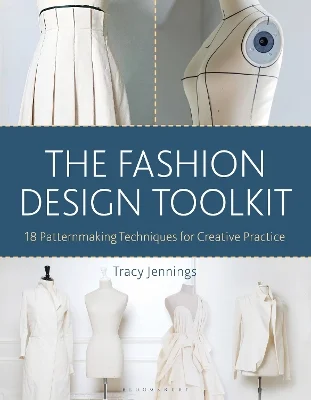
Description
By (author) Jennings Tracy
With The Fashion Design Toolkit you’ll learn how tried-and-tested techniques like gathers, pleats, tucks, and twists can help you adapt patterns and create your own original garment designs. Tracy Jennings walks you through 18 patterning tactics to inspire fresh ideas, demonstrating how embracing pattern drafting skills can lead to innovative and effective collections. Each technique is illustrated in a variety of contexts, showing how and why it has been used by other designers, so you can use the history of each tool as inspiration for your original collections. Ethical practice is woven throughout the book, with tips on how to implement techniques in an environmentally sustainable way. The 18 essential techniques are divided into 5 categories:
Establishing Fit and Flare: Darts, Slash & Spread, Seaming, Insets
Channeling Fullness: Gathers, Ruffles, Pleats, Tucks
Fashioning the Fluid and Unstructured: Arcs, Flounces, Drapes, Twists
Engineering Fabric and Form: Contouring, Structure, Textile Designs
Focusing on Concepts: Adaptation, Reduction, Zero Waste Online resources include a downloadable pattern block, which is available in US sizes 4–18.bloomsburyonlineresources.com/the-fashion-design-toolkit
Table of contents
Introduction1. Darts2. Slash and Spread3. Seaming4. Insets5. Textile Designs6. Gathers7. Ruffles 8. Pleats9. Tucks10. Arcs11. Flounces12. Drapes13. Twists 14. Contouring15. Reduction16. Adaptations17. Structure18. Zero WasteEdge FinishesIndex
Biographical note
Tracy Jennings is a professor of fashion at Dominican University, USA. She teaches courses in apparel design, clothing construction, textile science, and computer-aided design. She incorporates years of experience as a patternmaker and designer of women’s career wear into her classes. Her research interests include aspects of fashion and design related to creativity, technology, and sustainability.
Promotional headline
Demonstrates how 18 core techniques, such as darts, inserts, twists and folds, can be used to create beautiful garment designs or adapt existing patterns.
Feature
280 color images show each technique used as part of a range of different designs, illustrating the flexibility of each concept and encouraging readers to experiment in their own collection.
Feature
Patterning principles are presented as “techniques” that can be transferred to any number of designs, patternmakers take their first steps to becoming fashion designers as they adapt existing patterns to incorporate new elements.
Feature
Ethical practice is woven throughout the book, with tips on how to implement techniques in an environmentally sustainable way.
Feature
A basic pattern block will be available for download, so readers can get started quickly on their designs.



Reviews
There are no reviews yet.