
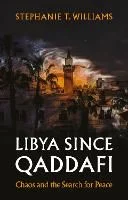
Description
By (author) Williams, Stephanie T.
Short /annotation:
An inside account of conflict, collapse and innovative approaches to reconstruction in Libya’s challenging post-2011 landscape.
:
Drawing on her experience as a United Nations mediator and a senior American diplomat, Stephanie T. Williams provides a first-hand examination of post-Qaddafi Libya. Using concrete examples from her experience in the country, Williams analyses the underlying drivers of the Libyan conflict, as well as the motivations of the international actors and the various Libyan protagonists. She bears witness to the horrific effect of General Haftar’s attack on Tripoli in 2019, how it tore apart a UN peace process, and how she worked alongside UN envoy Ghassan Salamé to reassemble some semblance of an international consensus under the Berlin Process and accompanying intra-Libyan tracks: military, economic and political.
Williams recounts her leadership of the UN mediation during the Covid pandemic, adopting new technologies and blending hybrid and physical meetings to produce the October 2020 ceasefire agreement, as well as progress on the economic track and an inclusive political agreement. She also lays out the pernicious effect of new media on peacemaking, and how disinformation and hate speech have exacerbated Libya’s fragmentation. Finally, Williams offers ideas on how to break Libya’s cycle of division and dysfunction to meet the longstanding aspirations of the people to live in peace and dignity.
Review quote:
”Well-reported and thoroughly dispiriting … an excellent short primer.”
Review quote:
”Williams provides a detailed and fascinating picture of the impossible position of the UN team on the ground in Libya, struggling to develop a long-term solution for a totally fragmented country… fascinating.”
Review quote:
”Wonderful writing abounds … a careful reading of Libya Since Qaddafi would help [Iran”s citizens, neighbours and the broader international community] address some of the obstacles that Iran would undoubtedly encounter [in case of regime change].”
Review quote:
”An essential resource for scholars, policymakers, and practitioners engaged in conflict resolution, diplomacy, and the study of North Africa and the broader MENA region.”
Review quote:
”Comprehensive, authoritative and persuasive, Williams” eyewitness account offers a front-row seat to dramatic negotiations with predatory politicians and deceitful outside powers. Even Russia”s notorious warlord Evgeny Prigozhin gets a cameo. Essential reading to understand why Libya remains divided, with broad lessons for international mediators.”
Review quote:
”An important book that will surely prompt a renewed debate on the UN”s role in Libya, and more broadly on the UN”s mediation efforts in post-conflict countries.
Review quote:
”Diplomacy may be a lost art, but Williams” brilliance harkens back to a bygone era of the scholar-diplomat mastering Libya”s unfathomable complexity and distilling its core dynamics–think Adrian Pelt or E. E. Evans Pritchard. Williams effortlessly bottles her experiences into flowing prose and captures the essence of the struggle for Libya”s future.”
Review quote:
”A rare and invaluable glimpse into the realities of peace mediation. With meticulous detail and inspiring frankness, Williams” account is both insightful and innovative, offering rich lessons for mediators, policymakers and scholars alike. This book is an exceptional resource—a detailed, honest account of a recent mediation process with profound implications for peace efforts in Libya and beyond.”
Review quote:
”A masterful exploration of Libya”s tumultuous journey over the pa
Reviews
There are no reviews yet.