
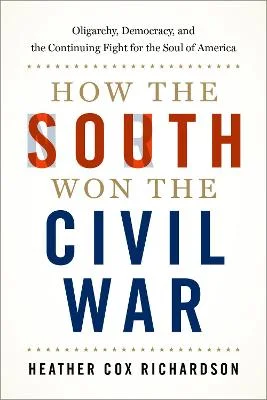
Description
By (author) Richardson Heather Cox
Short /annotation:
A provocative and propulsive look at American history, and the myth that the Civil War”s “new birth of freedom” ended oligarchy. It just moved westward.
:
Named one of The Washington Post”s 50 Notable Works of NonfictionWhile the North prevailed in the Civil War, ending slavery and giving the country a “new birth of freedom,” Heather Cox Richardson argues in this provocative work that democracy”s blood-soaked victory was ephemeral. The system that had sustained the defeated South moved westward and there established a foothold. It was a natural fit. Settlers from the East had for decades been pushing into the West, where the seizure of Mexican lands at the end of the Mexican-American War and treatment of Native Americans cemented racial hierarchies. The South and West equally depended on extractive industries-cotton in the former and mining, cattle, and oil in the latter-giving rise a new birth of white male oligarchy, despite the guarantees provided by the 13th, 14th, and 15th Amendments, and the economic opportunities afforded by expansion. To reveal why this happened, How the South Won the Civil War traces the story of the American paradox, the competing claims of equality and subordination woven into the nation”s fabric and identity. At the nation”s founding, it was the Eastern “yeoman farmer” who galvanized and symbolized the American Revolution. After the Civil War, that mantle was assumed by the Western cowboy, singlehandedly defending his land against barbarians and savages as well as from a rapacious government. New states entered the Union in the late nineteenth century and western and southern leaders found yet more common ground. As resources and people streamed into the West during the New Deal and World War II, the region”s influence grew. “Movement Conservatives,” led by westerners Barry Goldwater, Richard Nixon, and Ronald Reagan, claimed to embody cowboy individualism and worked with Dixiecrats to embrace the ideology of the Confederacy.Richardson”s searing book seizes upon the soul of the country and its ongoing struggle to provide equal opportunity to all. Debunking the myth that the Civil War released the nation from the grip of oligarchy, expunging the sins of the Founding, it reveals how and why the Old South not only survived in the West, but thrived.
Table of contents:
IntroductionChapter One: The Triumph of EqualityChapter Two: The Significance of the West in American HistoryChapter Three: Reconstructing AmericaChapter Four: The Search for Electoral VotesChapter Five: The West and the South Join ForcesChapter Six: The Post World War II West 1951-1980Chapter Seven: The Rise of Movement ConservatismConclusion: The Nature of America
Review quote:
Richardson”s clear prose makes this book incredibly lively and accessible.
Review quote:
Heather Cox Richardson, a professor of history at Boston College, explains Goldwater”s crusade and the trajectory of modern conservatism in her masterful How the South Won the Civil War: Oligarchy, Democracy, and the Continuing Fight for the Soul of America. A timely book, it sheds light on what was perhaps the most important political coalition of the 20th century.
Review quote:
Good revisionist history jars you, forces you to look at the past in a new way, and thereby transforms your view of the present. Heather Cox Richardson is a master of the genre, to the benefit of us all. Even those who take issue with her will be forced by this powerful book to come to terms with aspects of our past that we often just sweep under the rug of memory.
Review quote:
In a tour de force, Richardson exposes the philosophical connective tissue that runs from John C. Calhoun, to Barry Goldwater, to Donald Trump. It”s not party, it”s a complex ideology that has swaddled white s


Reviews
There are no reviews yet.